You’re lying in bed, lights off, and your mind suddenly starts replaying every little thing you said or forgot to do. You’re tired, but your thoughts won’t slow down. Sound familiar?

If you often feel anxious at night, you’re not alone. Many people struggle with night anxiety, that restless, wired feeling that shows up the moment you try to rest. It can feel impossible to shut your mind off when your body finally gets quiet.
But here’s something surprising: The secret to calmer nights doesn’t start at bedtime. It starts during your day. Let’s talk about one simple daytime habit that can help you stop night anxiety and finally sleep peacefully.
Your brain doesn’t randomly get anxious at night. Most of the time, it’s just the first chance it’s had to process all the stress you’ve been carrying.
Think about it. You spend the whole day moving, scrolling, working, and reacting. Then suddenly, at night, there’s nothing left to distract you. Your mind finally catches up, and all the noise from the day spills over.
That’s what causes sleep anxiety or nighttime restlessness. Your mind hasn’t had enough calm moments earlier, so it tries to make up for them when you’re trying to rest. It’s not about doing something wrong; it’s about giving your brain a few breaks before the night begins.
The trick is simple: The 10-Minute Mindset Reset.

Take just ten minutes each day to give your brain a mini-reset. It doesn’t have to be complicated. It could be a quiet walk outside, sitting by a window with your coffee, or writing down a few thoughts in a notebook. What matters is that it’s a moment when your mind slows down on purpose.
This small, consistent break tells your body that it’s safe to relax. Over time, it helps reduce that nighttime overthinking and helps you calm your mind before bed.
I started doing this by taking a quick walk after lunch. No phone, no podcast—just breathing and noticing the sunlight. It felt strange at first, but within a week, something shifted.
My nights got quieter. The anxious thoughts still showed up, but they passed faster. I didn’t lie awake as long. It was like my body finally remembered how to unwind. If you want to dive deeper into why this works, you might like this article: Why a 20-Min Walk Is Your Best Sleep Aid. It explains how light movement during the day can naturally reduce nighttime anxiety.
You don’t need a massive routine. Just small shifts that tell your body, “We can relax now.” Here are a few ideas to build a calmer baseline:
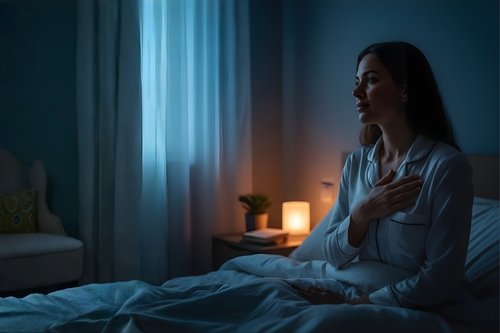
Some nights, you’ll still find yourself staring at the ceiling, thoughts racing. That’s normal. Progress isn’t about never feeling anxious; it’s about knowing what to do when you are.
When that happens, try one of your daytime tools in a small way. Take a few deep breaths. Focus on the feeling of your pillow. Whisper to yourself, “I’m safe.” And remember, it’s okay if your mind needs time to settle. You’re building new habits that support you long-term. That’s what sleep anxiety relief really looks like.
You don’t have to fix everything overnight. Sometimes, the best thing you can do is give yourself a little more kindness in the daylight hours. If you want to stop night anxiety, start with one small daytime change. Step outside, stretch, breathe, or write down what’s on your mind.
You deserve peaceful sleep, and it begins with how you care for yourself during the day.