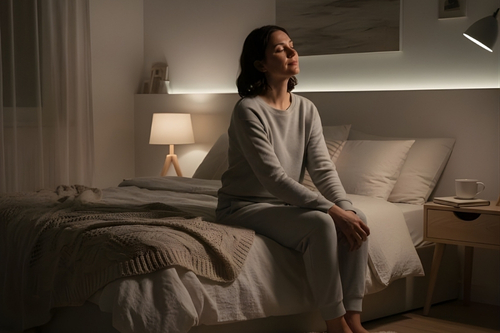
For months, I was caught in a cycle of exhaustion. Every night, I would lie in bed feeling tired but my mind just wouldn’t slow down. My thoughts jumped from one thing to another, what I said earlier, what I needed to do tomorrow, or something completely random. The harder I tried to fall asleep, the more awake I felt.
I didn’t realize it then, but I was struggling with sleep anxiety.
Sleep anxiety can make your nights feel longer than they should. It’s that uneasy feeling when your mind stays active even when your body is ready to rest. I tried everything I could think of such as soft music, herbal tea, deep breathing, and journaling before bed. They helped for a while, but nothing truly changed until I set one simple boundary. That small decision completely shifted how I sleep and how I feel.
My rule was simple: no emotional problem-solving after 9:00 p.m.
Before that, evenings were my overthinking time. I would go over every detail of the day, replay conversations, or start planning the next morning. I thought I was being productive, but really, I was keeping my mind on high alert.
One night, I decided to stop. If a stressful thought came up, I wrote it down in a notebook beside my bed and told myself, “I’ll deal with this tomorrow.” Then I closed the notebook and left it at that.
That small change was the first step toward peace. Setting that bedtime boundary helped me separate my day from my night. It taught my brain that it was okay to let things go until morning. Over time, it helped me reduce sleep anxiety before bed in a way that felt natural rather than forced.

We often think of boundaries as something we use at work or in relationships, but they also protect our peace of mind. When we don’t have limits, stress can sneak into every part of our day, even into our nights. Creating healthy boundaries for better sleep helps your mind know when to stay active and when to rest.
Without those limits, you might:
When you draw a clear line between your busy time and your rest time, your mind begins to associate bedtime with calm. You create space for your body to slow down and your thoughts to settle.
At first, it was not easy to stick to my new rule. My thoughts still tried to sneak in just before I closed my eyes. To help myself stay consistent, I built a small nighttime routine that supported my new mindset.
Here is what it looked like:
These simple steps helped me form sleep habits for relaxation that made bedtime feel calm and intentional. Within a week, I noticed I was falling asleep more easily and waking up feeling rested. The anxious thoughts still showed up sometimes, but they no longer took over.

The biggest lesson I learned is that boundaries are not about control, they are about care. When you create structure, you give yourself the gift of calm.
Once I started honoring my bedtime boundaries, I noticed my mornings felt lighter too. I woke up with more focus and patience because I was finally giving myself real rest.
If you are dealing with sleep anxiety, your version of this boundary might look different. Maybe you stop checking messages after dinner or avoid serious conversations right before bed. The key is to choose one small action that signals to your mind, “The day is done. It’s time to rest.”
If you want to try this for yourself, here are a few gentle ideas that can help you begin:
This is how you build healthy boundaries for better sleep, slowly and with compassion. Over time, you will notice that your body starts to relax more easily, and your nights begin to feel peaceful again.
Setting boundaries is a way of telling yourself that your peace matters. My rule of “no emotional problem-solving after 9:00 p.m.” might sound simple, but it changed everything about how I sleep and how I wake up.
If you have been struggling with sleep anxiety, remember that you do not need to fix everything at once. Just start with one clear boundary and hold it gently. With time and consistency, your mind will begin to trust that it is safe to rest.
You deserve a calm night and a clear morning. Sometimes, all it takes is one small choice to finally feel at ease.